
Cataract Surgery
Beyond Clear Vision After Cataract Surgery
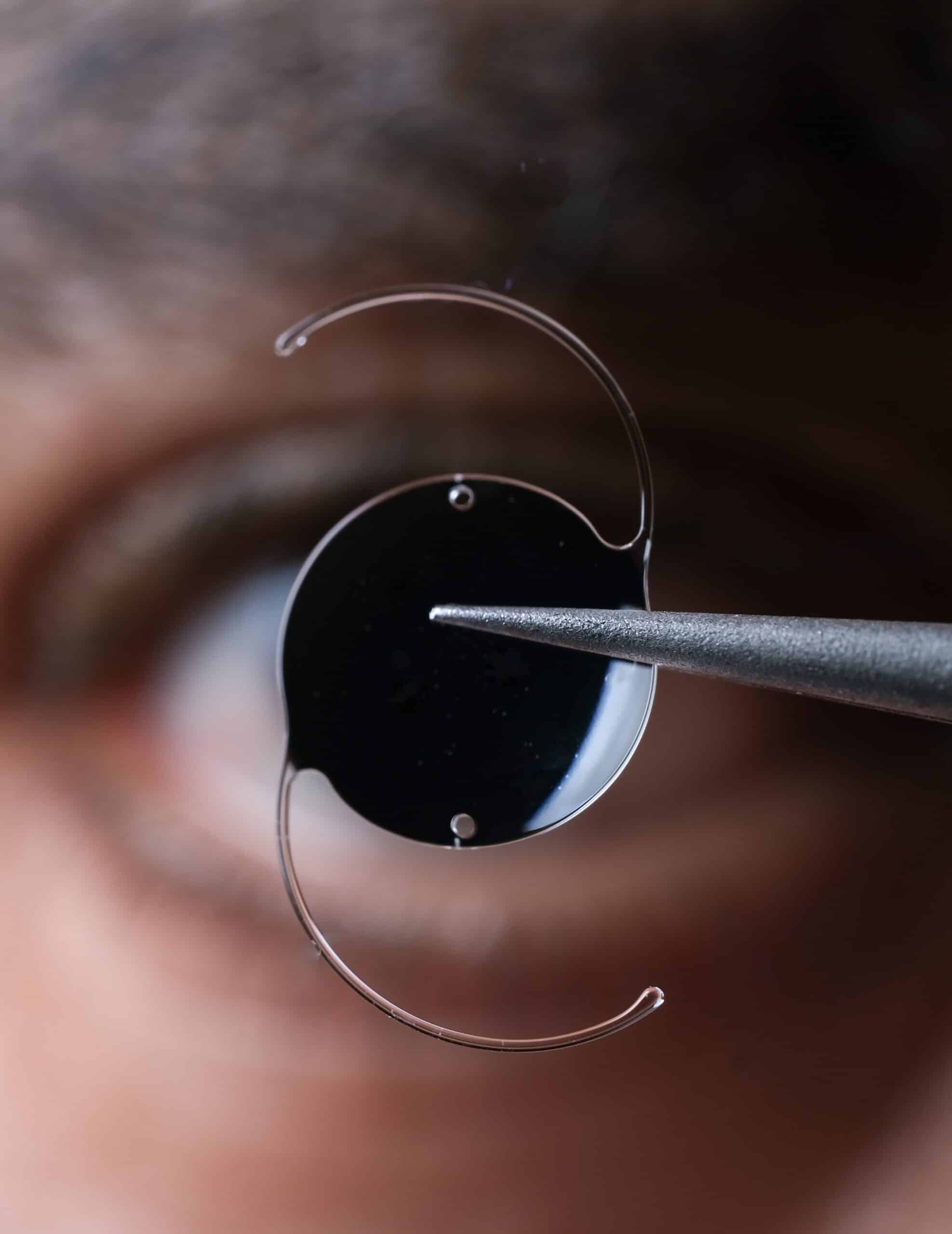
Cataract surgery today is about much more than simply removing a cloudy lens. It is a once-in-a-lifetime opportunity to improve and customize your vision. When your natural lens is removed during cataract surgery, it is replaced with an artificial intraocular lens (IOL). The type of lens you choose plays a major role in how you will see for the rest of your life, since typically is it never changed.
At Laser & Corneal Surgery Associates, we don’t just treat cataracts — we optimize your lifestyle.

Why Modern Intraocular Lenses Are Revolutionary
Advances in lens technology have transformed cataract surgery into a refractive procedure — one that can correct cataracts and common vision problems at the same time.
Dual Correction
Modern IOLs allow us to remove the cataract and correct pre-existing vision conditions such as nearsightedness (myopia), farsightedness (hyperopia), and astigmatism in a single streamlined procedure.
Refractive Precision
With today’s advanced measurements, imaging systems, and intraoperative guidance technology, we can select and position lenses with extraordinary accuracy.
Better-Than-Before Vision
Many patients achieve visual clarity that is equal to — or even better than — the vision they had before developing cataracts.
Proven Success
According to the American Society of Cataract and Refractive Surgery (ASCRS), more than 98% of cataract patients report significant improvement in vision following surgery.
Understanding Your IOL Options
Cataract surgery removes your natural cloudy lens and replaces it with a clear artificial intraocular lens (IOL). There are two broad categories of lenses:
Your choice depends on your visual goals, lifestyle, and desire for independence from glasses.

Monofocal Lenses (Standard Option)
A monofocal lens provides clear vision at one focal point. Most patients choose distance vision as their primary focus, allowing them to drive and see far away clearly without glasses.
However, because the lens is set for only one distance, glasses are typically needed for near tasks such as reading, computer use, or sewing.
Some patients may choose monovision, where one eye is set for distance and the other for near. This can reduce dependence on glasses but may not be ideal for everyone.
Monofocal lenses are typically covered by insurance and remain an excellent option for patients who do not mind wearing glasses for certain activities.

Multifocal Lenses
Multifocal lenses are designed to provide vision at more than one distance. These lenses use advanced optical designs that allow part of the lens to focus for distance and part to focus for near vision.
Patients who choose multifocal lenses often experience a significant reduction in their need for glasses for both reading and distance activities. Many are able to perform most daily tasks without corrective eyewear.
Because multifocal lenses divide light into different focal points, some patients may notice halos or glare around lights at night, particularly during the early adjustment period. Careful patient selection and counseling are essential to achieving high satisfaction.

Extended Depth of Focus (EDOF) Lenses
Extended Depth of Focus lenses provide a continuous range of vision rather than separate focal points. These lenses are designed to deliver smooth, natural focus from distance through intermediate vision, such as computer work.
EDOF lenses are an excellent option for patients who prioritize strong distance and intermediate vision with reduced reliance on glasses. Some patients may still require reading glasses for very fine print or prolonged near tasks.
Because EDOF lenses tend to produce fewer nighttime visual phenomena than traditional multifocal lenses, they are often well-suited for patients who frequently drive at night.

Toric Lenses (Astigmatism Correction)
If the cornea has an irregular shape, it causes a refractive error called astigmatism, which leads to blurred or distorted vision. For patients with astigmatism, this correction can be built directly into the lens implant.
Any lens that corrects astigmatism is called a toric lens. Toric technology can be incorporated into monofocal, multifocal, or extended depth of focus lenses.
Toric lenses significantly improve uncorrected distance vision in patients with astigmatism. However, if a monofocal toric lens is chosen, reading glasses may still be needed for near tasks.
Customizing Your Vision
Choosing your intraocular lens is highly personal. Your surgeon will perform detailed measurements of your eyes, evaluate your corneal shape, and discuss your lifestyle needs — including hobbies, work activities, and night driving habits.
Questions we consider include:
No single lens is “best” for everyone. The best lens is the one that aligns with your visual priorities.


The Opportunity of a Lifetime
Unlike glasses or contact lenses, your intraocular lens is permanent. Cataract surgery is typically performed only once per eye, making this a unique opportunity to invest in your long-term visual freedom.
With advanced imaging, laser-assisted techniques, premium lens technology, and real-time surgical guidance systems, we can now deliver highly customized visual outcomes.