
Cataracts
What They Are and How They Affect Your Vision
Your vision plays a vital role in your independence, safety, and overall quality of life. If you have noticed increasing blur, glare, or difficulty seeing clearly, a cataract may be the cause. Our doctors and staff are committed to helping you understand your diagnosis and guiding you through every step of your treatment. We will always take the time to answer your questions and address your concerns.

What is a Cataract?
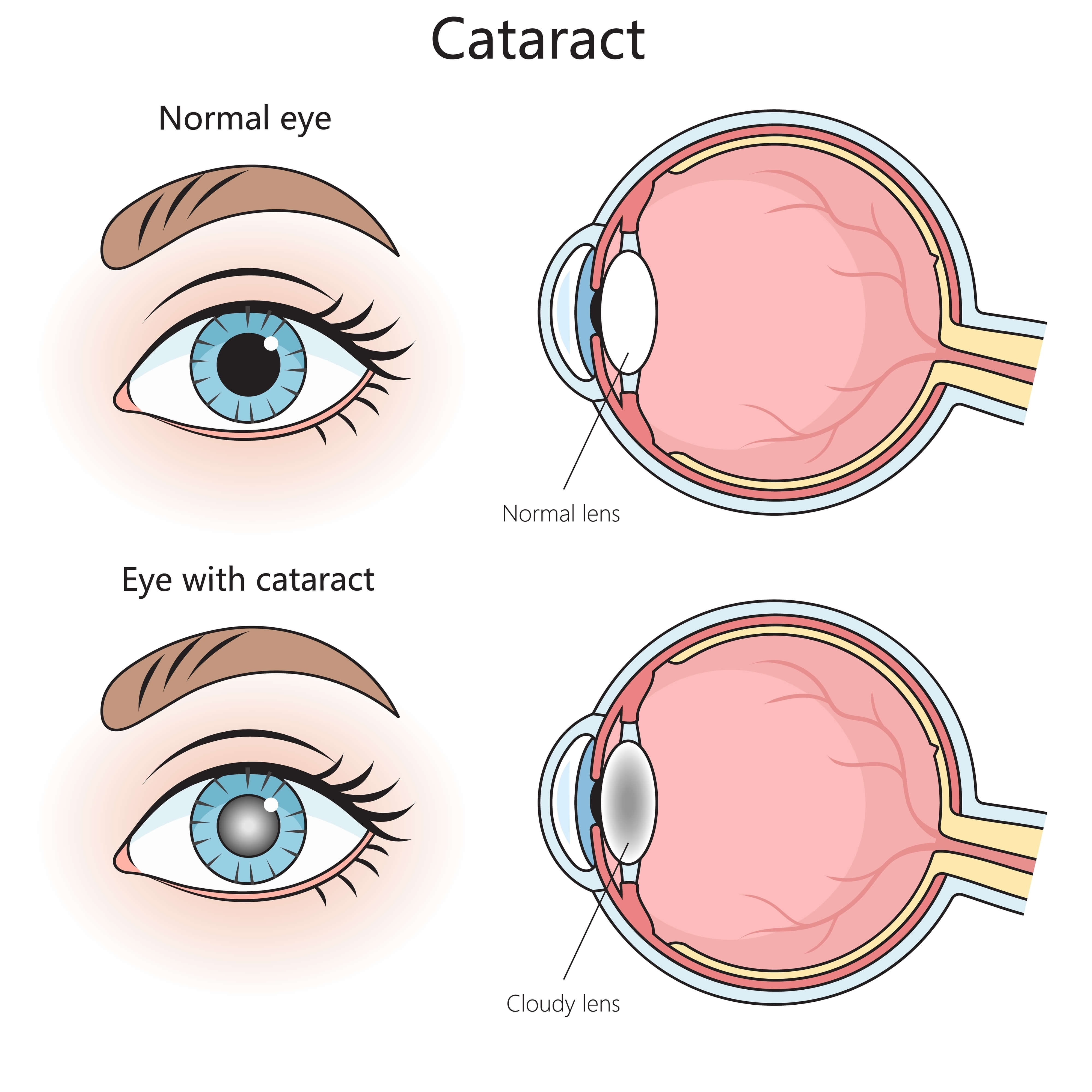
A cataract is a natural clouding of the eye’s lens. The lens sits behind the colored part of the eye (the iris) and works like the lens of a camera, focusing light onto the retina so you can see clearly. When we are young, the lens is clear. Over time, however, proteins within the lens can begin to break down and clump together, causing the lens to become cloudy.
Cataracts most commonly develop as part of the normal aging process, but they can also occur earlier due to genetics, medical conditions, eye injuries, or certain medications.
A cataract is not a growth and it is not a film over the eye — it is a change within your natural lens that gradually affects the quality of your vision.
How Cataracts Affect Vision
Because the lens becomes cloudy, light cannot pass through clearly. This leads to a number of visual symptoms that often worsen gradually over time.
Blurry or Cloudy Vision
Many patients describe their vision as blurry, hazy, or cloudy. Objects may appear out of focus, and updating glasses or contact lenses may no longer improve clarity. Fine details can become harder to see, and colors may appear faded or yellowed.
Difficulty Reading
You may notice that you need brighter light to read comfortably. Even with reading glasses, fine print can become difficult to see. This is often more noticeable in dimly lit environments.






Glare and Halos
Cataracts frequently cause increased sensitivity to light. You may see glare, starbursts, or halos around lights — particularly at night. Car headlights can be especially bothersome, and many patients begin to avoid nighttime driving due to reduced clarity and increased glare.
Trouble Seeing at Night
Reduced contrast and increased glare can make nighttime vision particularly challenging. Depth perception may also be affected.
Double Vision
Some patients experience double vision in one eye, which may improve temporarily when covering that eye.
When Is Cataract Surgery Needed?
Cataracts do not need to be removed until they begin interfering with your daily activities. If your vision is affecting your ability to drive, read, work, or enjoy hobbies, cataract surgery may be recommended.
Modern cataract surgery is one of the safest and most successful procedures performed today. During surgery, the cloudy lens is removed and replaced with a clear artificial lens called an intraocular lens (IOL). Advanced technology lenses are available that may reduce dependence on glasses for distance, intermediate, and near vision.
In many cases, laser-assisted cataract surgery can provide enhanced precision during key steps of the procedure.
Our team will carefully evaluate your eyes, discuss your visual goals, and recommend the best treatment options for you.