
Understanding Your Options for Clearer Vision
Over time, the natural lens of the eye becomes cloudy, making it difficult to see clearly. This clouding of the lens is called a cataract and is the leading cause of vision loss in people over age 55. Cataracts typically develop gradually and may cause blurry vision, glare, difficulty driving at night, fading of colors, and trouble reading even with updated glasses.
The only effective treatment for a cataract is surgical removal of the cloudy lens and replacement with a clear artificial lens called an intraocular lens (IOL). Cataract surgery is one of the safest and most commonly performed procedures in medicine today, with approximately 3 million surgeries performed each year in the United States. According to the American Society of Cataract and Refractive Surgery, more than 98% of patients experience successful improvement in vision following surgery.

A Legacy of Safer Cataract Surgery
Cataract surgeons around the world rely on the same protective step before surgery begins: a povidone iodine preparation that prevents post-operative infection. That method was developed by our founding surgeon, Dr. Mark Speaker, whose research identified how infection occurs after cataract surgery. When you have cataract surgery at Laser & Corneal Surgery Associates, you are cared for by the practice whose work helped make the procedure safer for patients everywhere.
Your surgery here is performed by Dr. Scott Spector, who has performed more than 25,000 operations and owned the first femtosecond cataract laser in Connecticut.
As a surgeon who has performed both LASIK and cataract surgery since the 1990s, he brings a refractive surgeon’s precision to lens selection and surgical planning.

Types of Cataract Surgery
In the United States, there are two primary techniques used to perform cataract surgery:
Both techniques remove the cloudy lens and replace it with an artificial lens implant. The difference lies in how certain critical steps of the procedure are performed.
Phacoemulsification Cataract Surgery
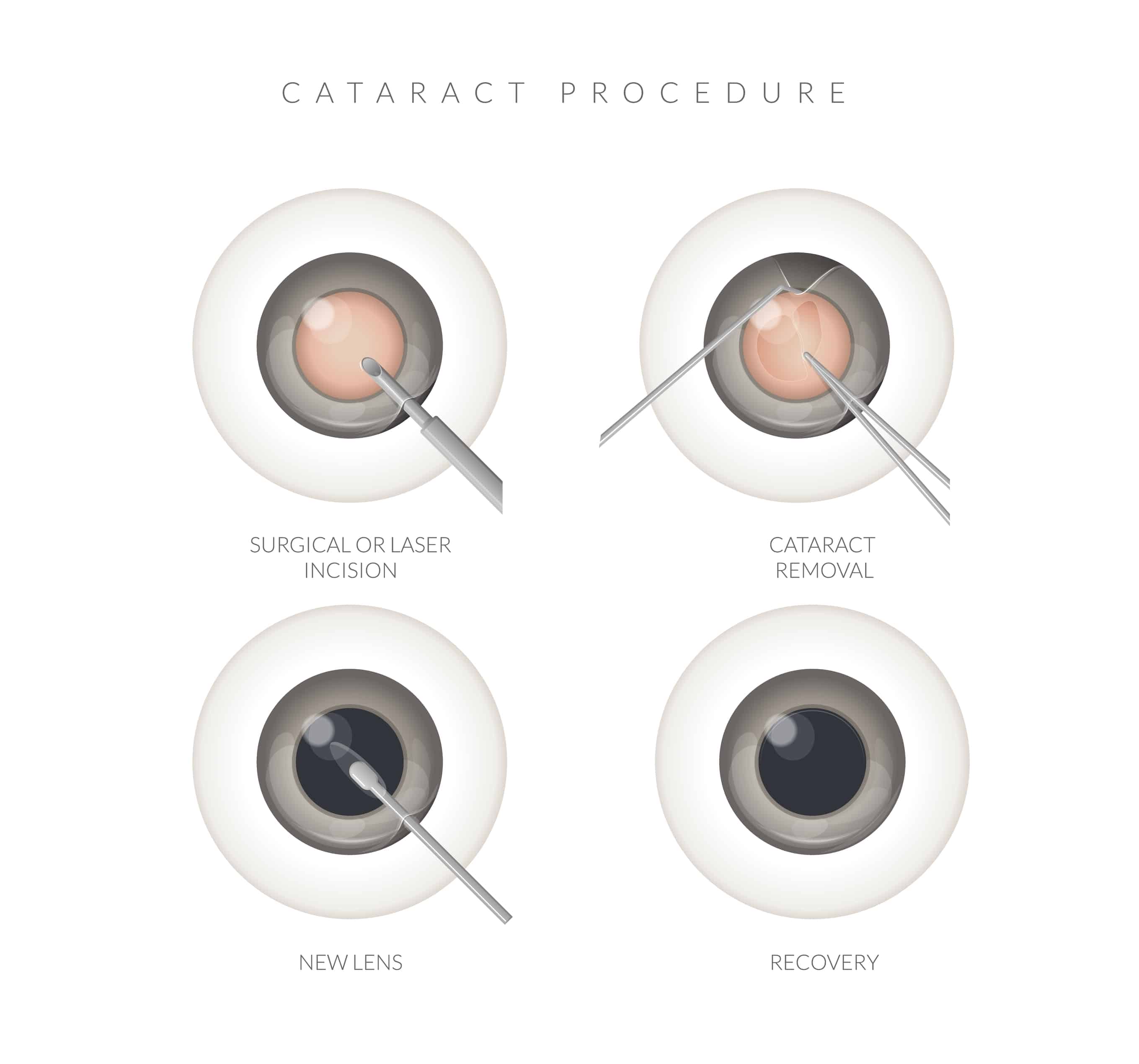
Phacoemulsification is considered the traditional or standard method of cataract surgery. During this procedure:
- A small incision is made in the cornea using a precise surgical blade.
- A circular opening is created in the capsule (the thin “bag” that holds the lens).
- An ultrasound probe is inserted to break up the cataract into tiny fragments.
- The fragments are gently suctioned out.
- A foldable intraocular lens is inserted through the same small incision and positioned inside the capsule.
This procedure has been performed safely for decades and remains highly successful.
Laser-Assisted Femtosecond Cataract Surgery
Laser-assisted cataract surgery represents the next generation of precision cataract treatment. Using advanced femtosecond laser technology, several of the most delicate steps of surgery can now be automated with extraordinary accuracy.
At Laser & Corneal Surgery Associates, we use the CATALYS™ Precision Laser System. This technology uses advanced 3D imaging to create a detailed map of your eye. Because every eye has a unique size and shape, this imaging allows your surgeon to customize the treatment plan specifically to you.
How Laser Cataract Surgery Works
Advanced 3D Imaging
The CATALYS system builds a precise 3D image of your eye and guides the laser treatment according to your eye’s anatomy.
Laser Incisions
Instead of using hand-held blades, the laser creates precise corneal incisions. If you have pre-existing astigmatism, the laser can also perform highly accurate corrective incisions.
Capsulorhexis (Lens Opening)
The capsule holding the cataract must be opened in a circular fashion. With the laser, this opening is created with a level of precision and consistency not achievable by hand. Clinical studies have shown this step to be approximately 10 times more accurate when performed by laser.
Lens Fragmentation
The laser softens and breaks the cataract into tiny pieces before removal. This significantly reduces the amount of ultrasound energy required, often resulting in less inflammation, less swelling, and a quicker recovery.
Benefits of Laser Cataract Surgery
For patients with delicate corneas or weakened supporting structures, the gentleness of laser-assisted surgery can offer important advantages.
Intraocular Lens (IOL) Options
When the cataract is removed, it is replaced with an artificial intraocular lens (IOL). Today’s lens technology allows us not only to remove the cataract but also to improve your overall quality of vision.
Monofocal Lenses
Monofocal lenses provide clear vision at one focal point — typically distance. Patients who choose monofocal lenses may still need reading glasses for near tasks.

Toric Lenses
Toric lenses are designed to correct astigmatism. These lenses can significantly reduce or eliminate the need for glasses for distance vision in patients with pre-existing corneal astigmatism.

Multifocal and Extended Depth of Focus (EDOF) Lenses
These advanced technology lenses are designed to provide a range of vision — distance, intermediate (computer range), and near. Many patients who choose premium lenses experience significant freedom from glasses after surgery.

Your surgeon will perform detailed measurements and calculations before surgery to determine the optimal lens power and type based on your visual goals.
We offer the latest generation of intraocular lenses, including PanOptix trifocal and eyhance extended vision lenses, matched to your visual goals during your consultation.
Refractive Cataract Surgery
Cataract surgery today is no longer just about removing a cloudy lens — it is about optimizing your vision. With refractive cataract surgery, careful measurements are taken to match your lifestyle and vision needs.
In some cases, minor fine-tuning may be performed after surgery using laser vision correction to achieve your ideal outcome.
ORA-Guided Advanced Cataract Surgery
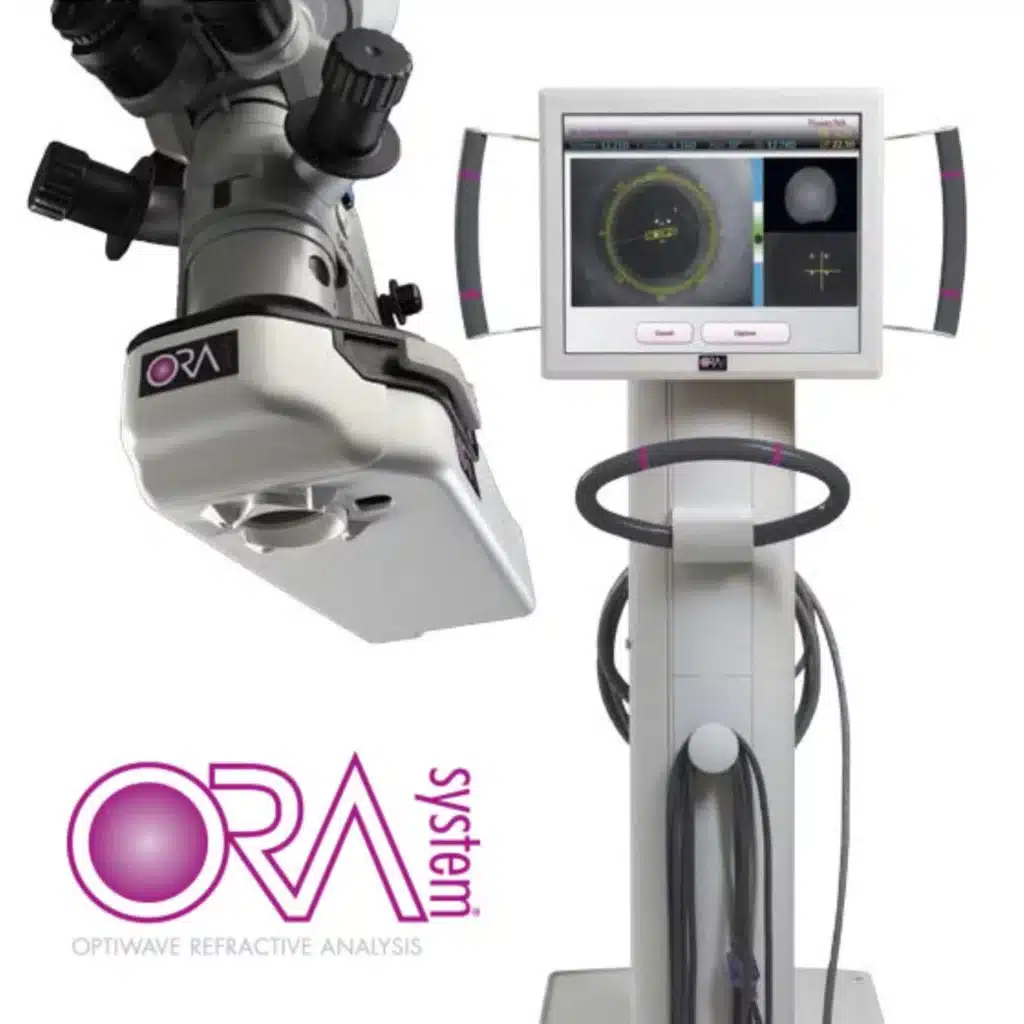
The ORA System® provides real-time measurements during surgery. During the procedure, your surgeon can measure your eye and make immediate adjustments to optimize lens power and positioning.
ORA-guided cataract surgery enhances precision and improves the likelihood of achieving your desired visual result. No matter which premium lens option you choose, the ORA System adds another level of accuracy and customization.
After Cataract Surgery
Cataracts do not grow back once removed. However, months or years after surgery, some patients may develop clouding of the thin capsule that holds the lens implant. This condition can cause glare or a hazy, fog-like effect.
If this occurs, a simple in-office laser procedure called a YAG capsulotomy is performed. This painless treatment clears the cloudy capsule and permanently restores vision. Once performed, it does not need to be repeated.
Cataract surgery today offers extraordinary safety, precision, and visual potential. With advanced laser technology, premium lens options, and real-time surgical guidance systems, we can tailor your procedure to your individual eyes and lifestyle goals.